Beginner guide
What to expect at your first BJJ class
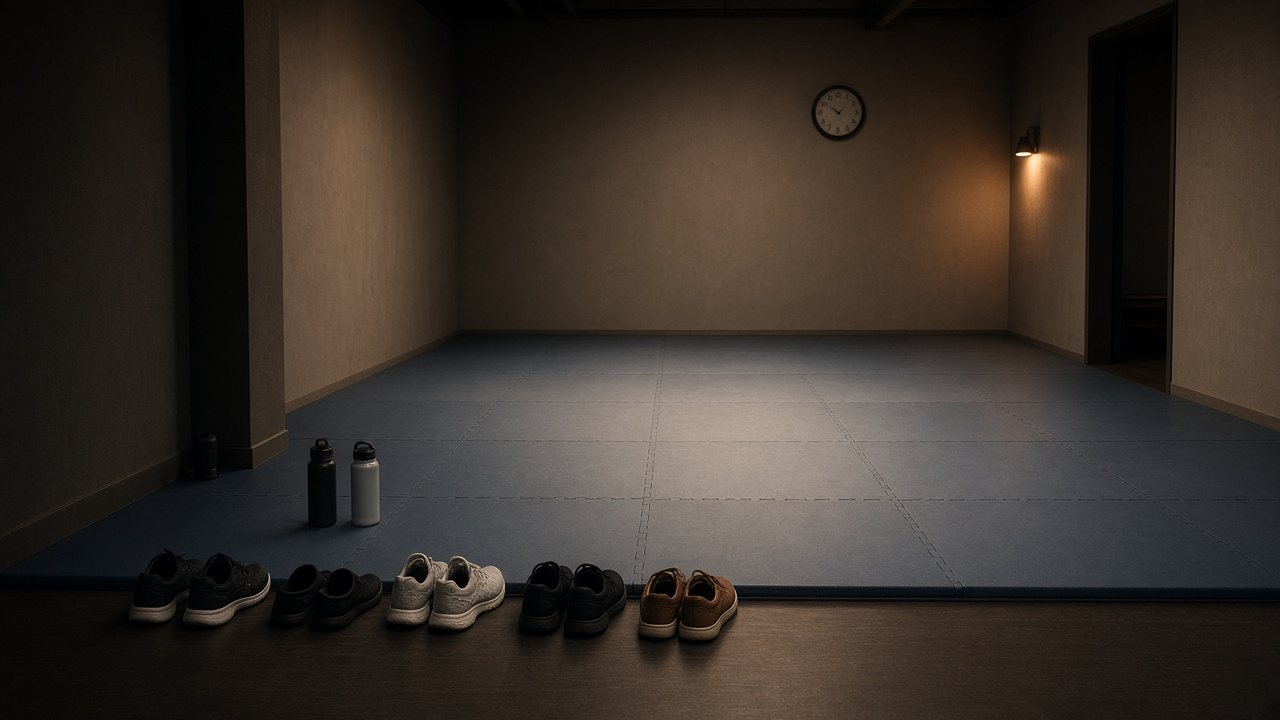
Image: generated for this site with AI; it does not show a real product, brand, or person.
Your first jiu-jitsu class is mostly about learning how the school works. You are not expected to know anything, and you are not being graded. Schools run things differently, so treat everything below as typical, not universal — and ask the school when in doubt.
This page is general information, not coaching or medical advice. Brazilian jiu-jitsu is a partner art: learn techniques from a qualified instructor in person.
Before you go
- Ask about a trial class. Many schools offer one. Ask what it costs, whether you have to sign anything, and whether there is a contract before you commit.
- Ask which class to attend. Schools often run beginner, all-levels, gi, and no-gi classes. Choose one labeled for beginners if there is one.
- Ask what to wear. Some schools lend a gi for a trial. Some want a fitted shirt and shorts without pockets or zippers. See the gi guide and the rash guard guide only once you know what that school wants.
- Check who teaches. In most places there is no license required to teach jiu-jitsu, so it is reasonable to ask about an instructor’s background and how the school handles beginners and injuries.
- Tell them about injuries or conditions before class starts. Talk with a doctor first if you are new to exercise, are returning from an injury, or have a health condition.
What to bring
- Clean training clothes your school accepts (a clean gi or a rash guard and shorts).
- Water.
- Sandals or slides for walking off the mat to the bathroom. Shoes come off before the mat.
- A towel and a change of clothes. The CDC advises showering right after exercise and not sharing towels.
- A bag with a separate pocket for sweaty gear, if you want one. An example: Gold BJJ Jiu Jitsu Backpack (the listing describes a waterproof gi pocket). You can also use any gym bag and a plastic bag.
- A mouthguard, only if the school asks for one or you want one. See the mouthguard guide.
Mat hygiene and etiquette
- Keep fingernails and toenails short. Take off jewelry. Tie back long hair.
- Wear a clean gi or clothing every class. The CDC says to wash and completely dry clothes after each use.
- Do not wear street shoes on the mat, and avoid walking barefoot in the bathroom.
- Cover cuts, and sit out if you have sores or a rash. The CDC lists redness, swelling, warmth, and pus as signs to get checked.
- Ask the coach before you step on the mat. Many schools have a small habit — like bowing or saying hello — and it is fine to ask what it is.
What the class usually looks like
- Warm-up. Jogging, shrimping (hip escapes), rolls, bridges, and other mobility drills. See our solo drills page for simple versions.
- Technique. The coach shows a position or move, usually twice, and then partners practice it.
- Drilling. You repeat the move with a cooperative partner, slowly at first.
- Positional sparring or live rounds (“rolling”). Often optional for new students. It is fine to say you are new and ask for a lighter pace.
- Cool-down and wrap-up. Stretching and announcements.
Tapping and safety
A “tap” — a few quick taps with a hand or foot on the partner or the mat, or a spoken “tap” — means “stop now.” Tap early if you feel pressure you do not like, and release immediately when your partner taps. Stop if you feel sharp pain, dizziness, or unusual shortness of breath, and tell your coach. Do not learn chokes or joint locks from videos and try them on friends.
How you will probably feel
Tired, confused about where your hands go, and a little sore the next day — all common for a first class, and none of it is a test you failed. A useful goal for the first visit is to leave knowing how that school teaches, whether the coach and the people there treat beginners well, and without an injury. If you want to know what the colored belts mean, see the belt system guide.
Some links on this page go to example products on Amazon. As an Amazon Associate I earn from qualifying purchases. These are examples drawn from seller listings, not reviews, and not a claim that any product is best. Check the seller’s current size, price, and return policy before you buy.
Sources
- CDC — MRSA prevention and control for athletes. Hygiene, washing and drying uniforms, not sharing personal items, covering cuts.
- CDC — Ringworm prevention. Shower after practice, keep sports gear clean, do not share gear.
- American Academy of Dermatology — How to prevent skin conditions in athletes. Wash clothes and sports bags, disinfect equipment, check skin regularly.